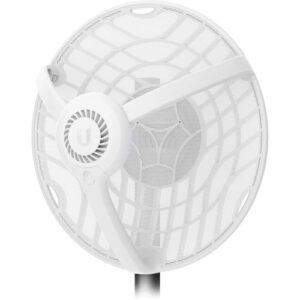
Cisco Aironet Antenna – 2.4 GHz, 5 GHz – 4 dBiDipole
The next generation of Cisco Aironet 802.11n access points -the Cisco Aironet 3600e Series and 1550 Series- requires the use of dual-band external antennas to make them fully functioning units. As these access points take greater advantage of the multiple-input multiple-output (MIMO) features supported under the 802.11n standard, the number of radio transceivers per frequency band has increased. Using dual-band antenna ports allows the access point to support these added transceivers while maintaining a reasonably low number of antenna connections. Each dual-band antenna can transmit or receive Wi-Fi signals in both the 2.4-GHz and 5-GHz bands simultaneously.
Related products
Rocstor USB C to 3.5mm Audio Adapter – Premium USB-C to 3.5mm Audio Adapter – USB Type C to AUX Female Wired Headphone Jack w/32-bit DAC Active Digital Sound Card for Headset – Compatible with Windows®. macOS®, Chrome®, USB-C, Thunderbolt™ 3, iPad® (with USB-C), Pixel® 3, 4, 5, 6. Samsung Galaxy – Black – TAA Compliance
- Extremely smooth and high quality audio signal
- Enhance 3dB analog signal out
- 32-bit DAC Active Digital Sound Card for Headset
- Easily compatible with all types of jack designs
- High sampling rate, resulting in noise free and distortion-less audio
- Light-weight adapter, easily fits into your bag or pocket